The navratna: nine stones, one jewel
Few pieces of Indian jewellery carry as much meaning as the navratna. Here is what the nine stones are, and why they are always set the same way.
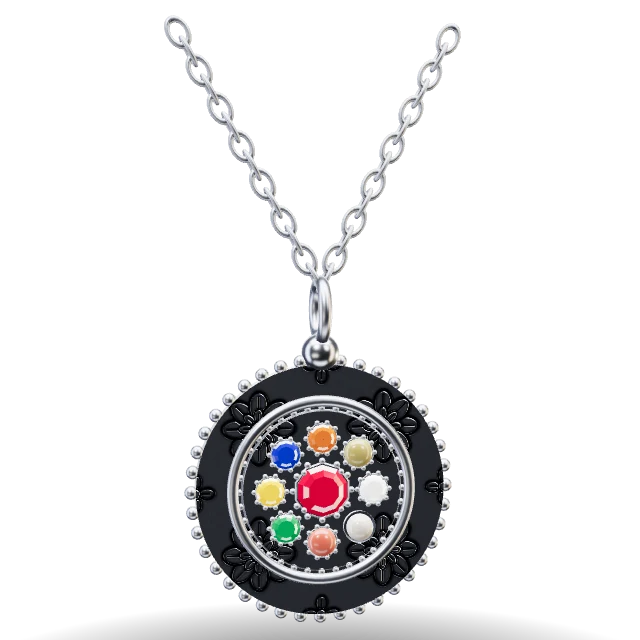
Navratna means simply "nine gems". In Indian tradition each of the nine stands for one of the navagraha, the nine celestial bodies of Vedic astrology: the Sun and the Moon, five planets, and the two shadow points Rahu and Ketu. Worn together, the stones are meant to bring all nine into balance, which is why a navratna is so often given at a new beginning.
The nine stones
| Stone | In Hindi | Stands for |
|---|---|---|
| Ruby | Manik | The Sun (Surya) |
| Pearl | Moti | The Moon (Chandra) |
| Red coral | Moonga | Mars (Mangal) |
| Emerald | Panna | Mercury (Budh) |
| Yellow sapphire | Pukhraj | Jupiter (Guru) |
| Diamond | Heera | Venus (Shukra) |
| Blue sapphire | Neelam | Saturn (Shani) |
| Hessonite | Gomed | Rahu |
| Cat's eye | Lehsunia | Ketu |
Why the ruby sits at the centre
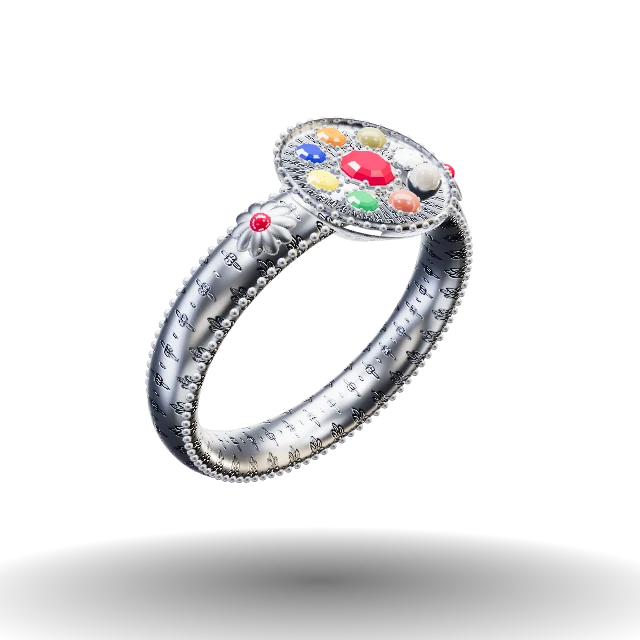
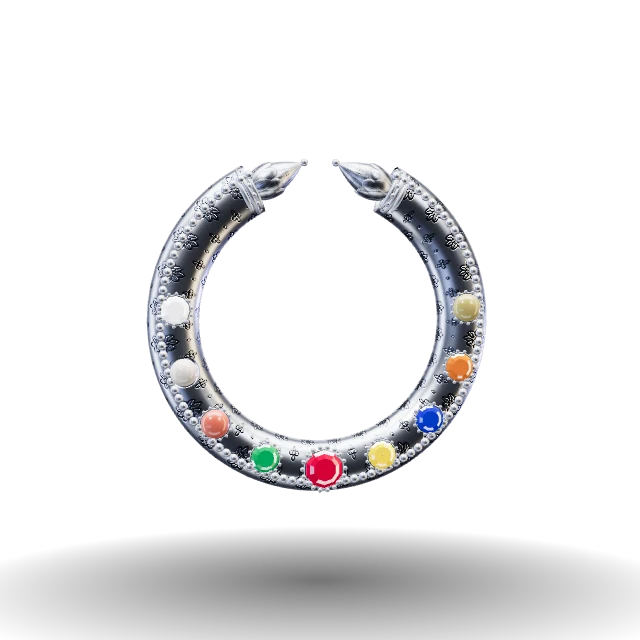
The Sun is the centre of the navagraha, so its stone, the ruby, takes the centre of the jewel. The other eight are arranged around it in a fixed order. In a round flower setting, like our Navratna Ring, they form a ring of eight petals; in a straight line, like the Navratna Haar, they run in sequence along the front.
A navratna is chosen for what it means as much as for how it looks.
Wearing a navratna
Because it holds every colour, a navratna goes with almost anything: it suits a simple kurta as easily as a bridal lehenga. In silver, and especially in an oxidised finish, the nine colours stand out clearly against the darker metal.
The pearl and the coral are softer than the other stones, so a navratna piece deserves a little extra care: keep it away from water, perfume and harsh cleaners, and store it on its own so harder stones cannot scratch it. Our care guide has more.
Navratna pieces at Palak
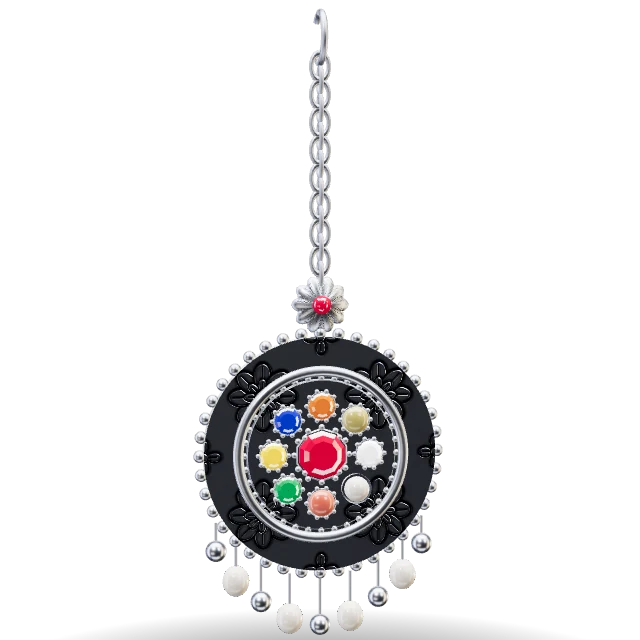
The nine gems appear in a haar, a ring, a pendant, a kada, a maang tikka, a mangalsutra and a full bridal set. Each can be turned in 3D before you enquire.